
Does initial high efficacy therapy in multiple sclerosis surpass escalation treatment strategy? A comparison of patients with relapsing-remitting multiple sclerosis in the Czech and Swedish national multiple sclerosis registries.

Expert article by Ing. Tereza Hrnčiarová, Ph.D. from the 1st Medical Faculty of Charles University deals with the issue of treatment strategies in relapsing-remitting multiple sclerosis. Her work is based on data from the Czech ReMuS registry and the Swedish SMSR (Swedish MS Registry). It builds on the...
Treatment of Multiple Sclerosis is Experiencing a Revolution | ReMuS Registry Press Conference 2023

To mark the approaching World Multiple Sclerosis (MS) Day, the ReMuS Patient Registry held its traditional press conference on 25 May 2023. The conference presented the most up-to-date data on MS and the practical achievements that the ReMuS Registry has been able to implement during its 10 years of existence...
The Czech National MS Registry (ReMuS): Data trends in multiple sclerosis patients whose first disease-modifying therapies were initiated from 2013 to 2021

Multiple sclerosis is a serious neuroimmunological disease and data on its incidence and treatment are systematically and longitudinally evaluated by the national ReMuS registry. Trends in the treatment of patients in the Czech Republic were discussed by Dominika Št'astná, M.D., Ph.D. from the General University Hospital in Prague in her...
Proportion and characteristics of secondary progressive multiple sclerosis in five European registries using objective classifiers

Secondary progressive multiple sclerosis (SPRS) represents an important stage in the development of multiple sclerosis, but is often difficult to diagnose accurately. A study conducted in five European countries used objective classifiers to determine the proportion and characteristics of SPRS in different registries of multiple sclerosis patients, including the national ReMuS registry. The findings suggest ...
To be or not to be vaccinated: The risk of MS or NMOSD relapse after COVID-19 vaccination and infection

In a recent study published in Multiple Sclerosis and Related Disorders, researchers examined the risk of relapse in patients with multiple sclerosis (MS) and neuromyelitis optica (NMOSD) after vaccination against COVID-19 and after undergoing COVID-19. The study looked at data from the Czech national ReMuS registry and showed...
Analysis of the Group of Pediatric Patients With Relapsing-Remitting Multiple Sclerosis: Data From the Czech National Registry

Multiple sclerosis can also affect children, although it is a rarer form of the disease. Approximately 3-10 % patients will develop multiple sclerosis before the age of 16. This study focuses on the analysis of a group of pediatric patients with relapsing form of multiple sclerosis who started treatment...
Is pregnancy in MS patients safe and what is its impact on MS course? Real World evidence of 1,533 pregnancies in Czech Republic

Pregnancy in patients with multiple sclerosis (MS) requires special care, particularly with regard to decisions regarding disease-modifying disease (DMD) treatment and counselling regarding the period of conception, pregnancy and the postpartum period. This study aims to analyze the impact of pregnancy, childbirth or miscarriage on the course of multiple sclerosis ...
Multiple sclerosis, neuromyelitis optica spectrum disorder and COVID-19: A pandemic year in Czechia

The emergence of the novel coronavirus COVID-19 has raised concerns about the course of this disease in patients with multiple sclerosis (MS) and neuromyelitis optica spectrum disorder (NMOSD). This study aimed to evaluate the incidence, severity, and risk factors for a more severe course of COVID-19 among patients with MS and NMOSD ...
COVID-19 and multiple sclerosis under scrutiny | ReMuS 2021 registry press conference
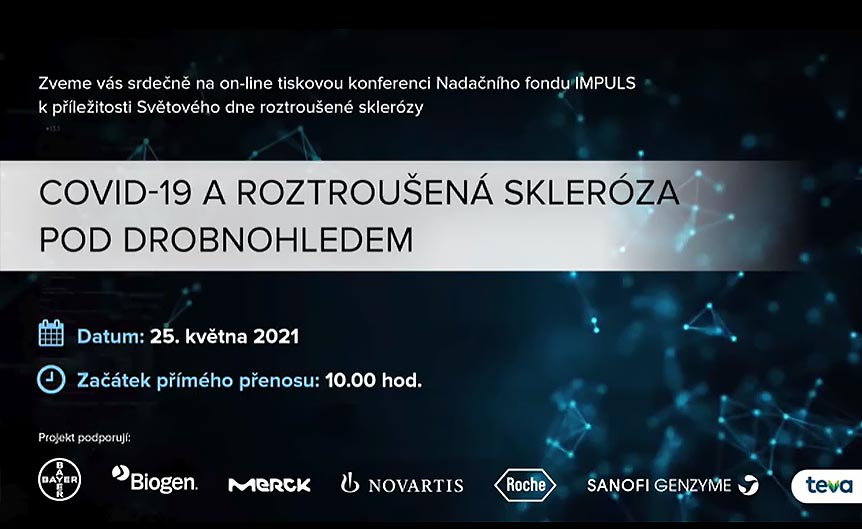
Exactly 1,918 patients with multiple sclerosis (MS) who have also contracted coronavirus are being closely monitored by doctors in the ReMuS Multiple Sclerosis Patient Registry. Since March last year, they have been investigating the symptoms, treatment and possible impact of coronavirus on this specific group of people. Initial analyses show that MS is not a risk factor, but patients who are older, have more severe neurological impairment, are obese and also have some type of chronic therapy are at higher risk...
Treatment Switching and Discontinuation Over 20 Years in the Big Multiple Sclerosis Data Network

This study focuses on the description of treatment interruptions and discontinuations in the Big Multiple Sclerosis Data Network registry group. This cohort study, led by Prof. Jan Hillert from Karolinska Institutet, Sweden, pooled data from five clinical registries covering a period of 20 years....